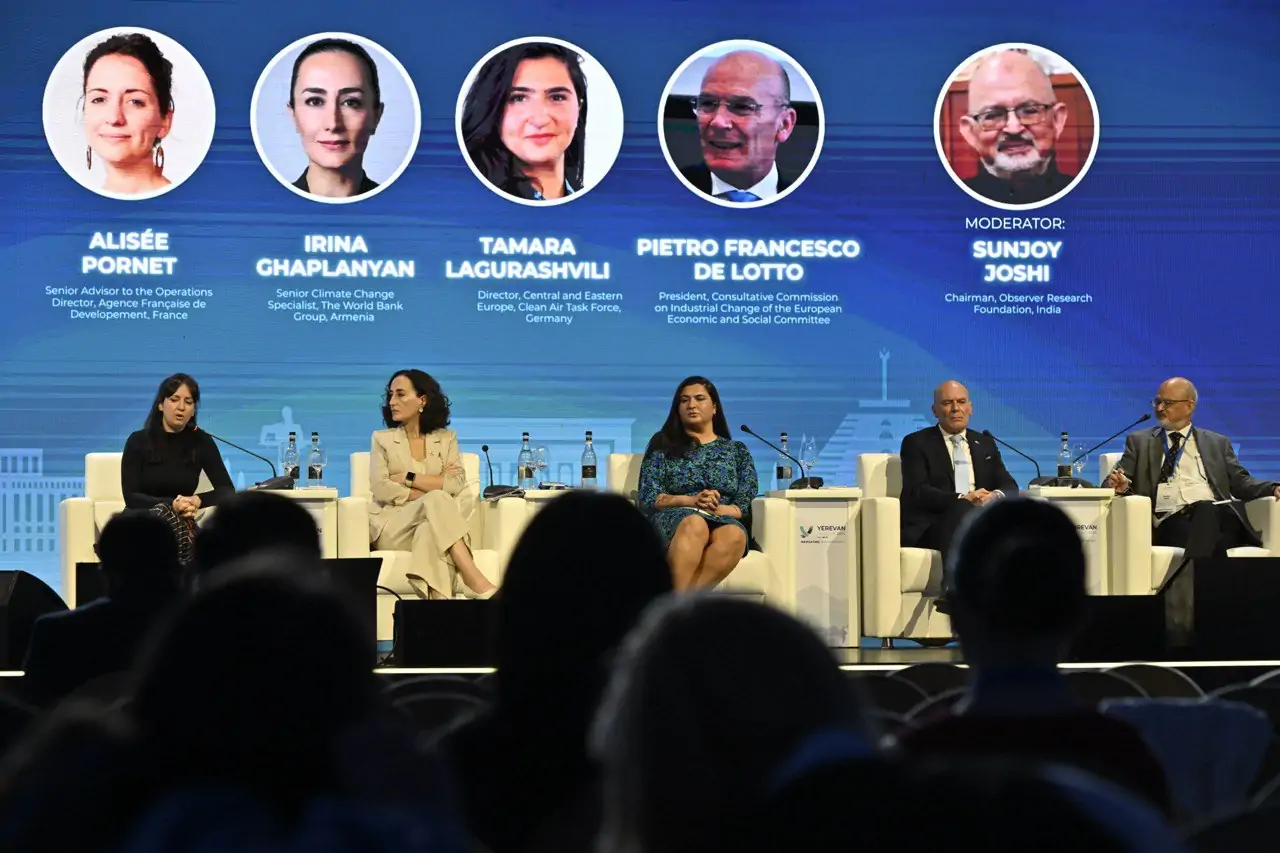
Reversing Climate Change and Biodiversity Loss: Balancing Ecology and Economy

As part of the Yerevan Dialogue, leading international experts gathered today in Armenia to address the urgent challenges of climate change and biodiversity loss. With global biodiversity having declined by 69% over the past 50 years and climate change accelerating threats to food security, health, and livelihoods, panelists called for transformative global action that balances environmental protection with sustainable economic development.

Pietro Francesco De Lotto, President of the Consultative Commission on Industrial Change of the EESC, emphasized, “Industrial transformation must become a driving force for sustainability and equity.” Irina Ghaplanyan, Senior Climate Change Specialist at the World Bank, added, “We must mainstream environmental goals into all aspects of policy and investment.” Other panelists echoed the call for integrated, inclusive, and science-driven strategies to mitigate harm and build resilience.

Moderated by Sunjoy Joshi, Chairman of the Observer Research Foundation, the session underscored the importance of bold leadership, finance reform, and global cooperation to ensure that by 2050, humanity can live in harmony with nature.

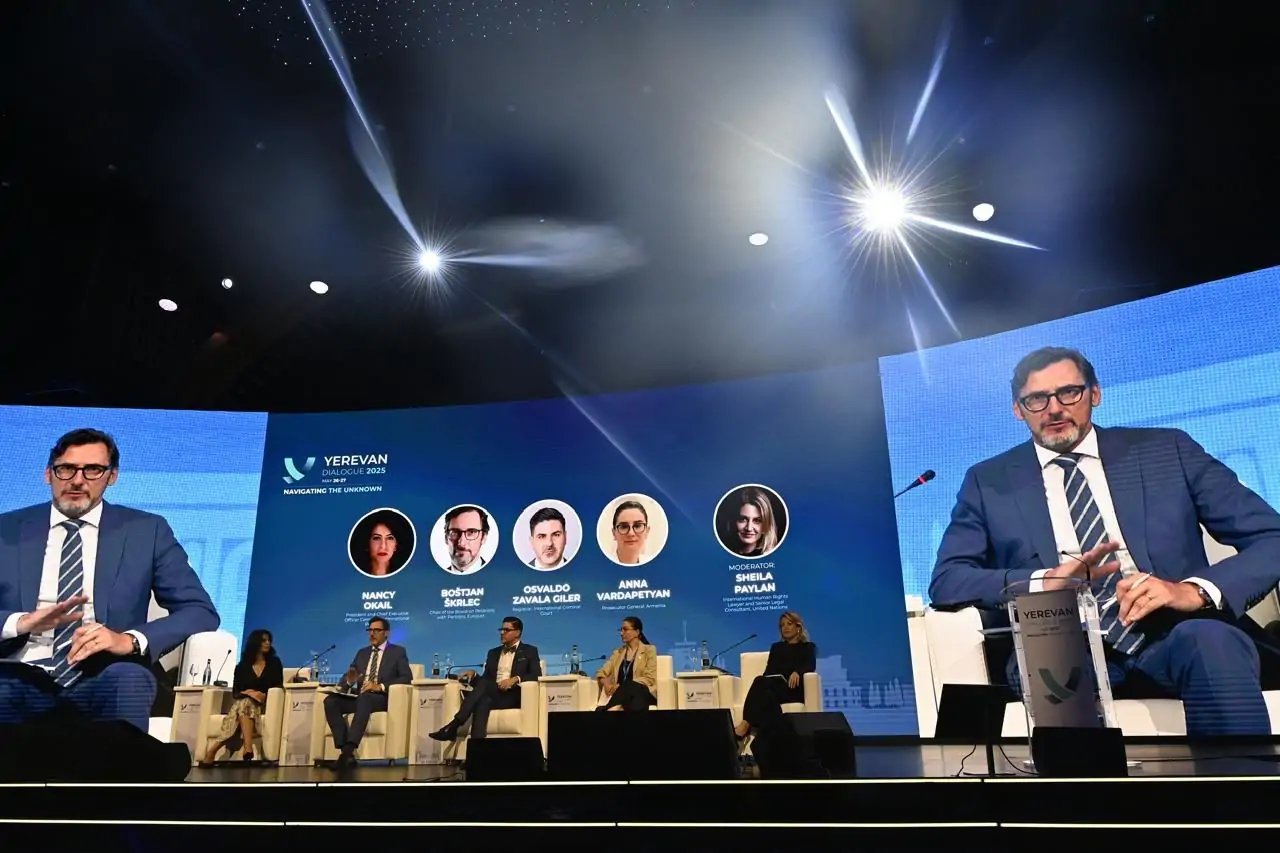
Upholding Justice: The Global Imperative of the Rule of Law

A powerful conversation unfolded on the global stage, uniting key figures committed to defending international justice, including Anna Vardapetyan, Prosecutor General of Armenia; Osvaldo Zavala Giler, Registrar of the International Criminal Court; Boštjan Škrlec, Chair of the Board on Relations with Partners at Eurojust; and Nancy Okail, President and Chief Executive Officer of the Center for International Policy, USA. The panel was moderated by Sheila Paylan, International Human Rights Lawyer and Senior Legal Consultant at the United Nations.

Anna Vardapetyan stressed that “While the legal frameworks are in place, the world urgently needs the collective will to act to uphold the rule of law and deliver justice for all.” The discussion highlighted critical threats to international justice, including selective application of justice, political intimidation of institutions, and corruption fueled by oligarchic interests.

The panel emphasized that crimes such as money laundering and tax evasion transcend borders and that global cooperation remains the only effective path forward in defending the rule of law.

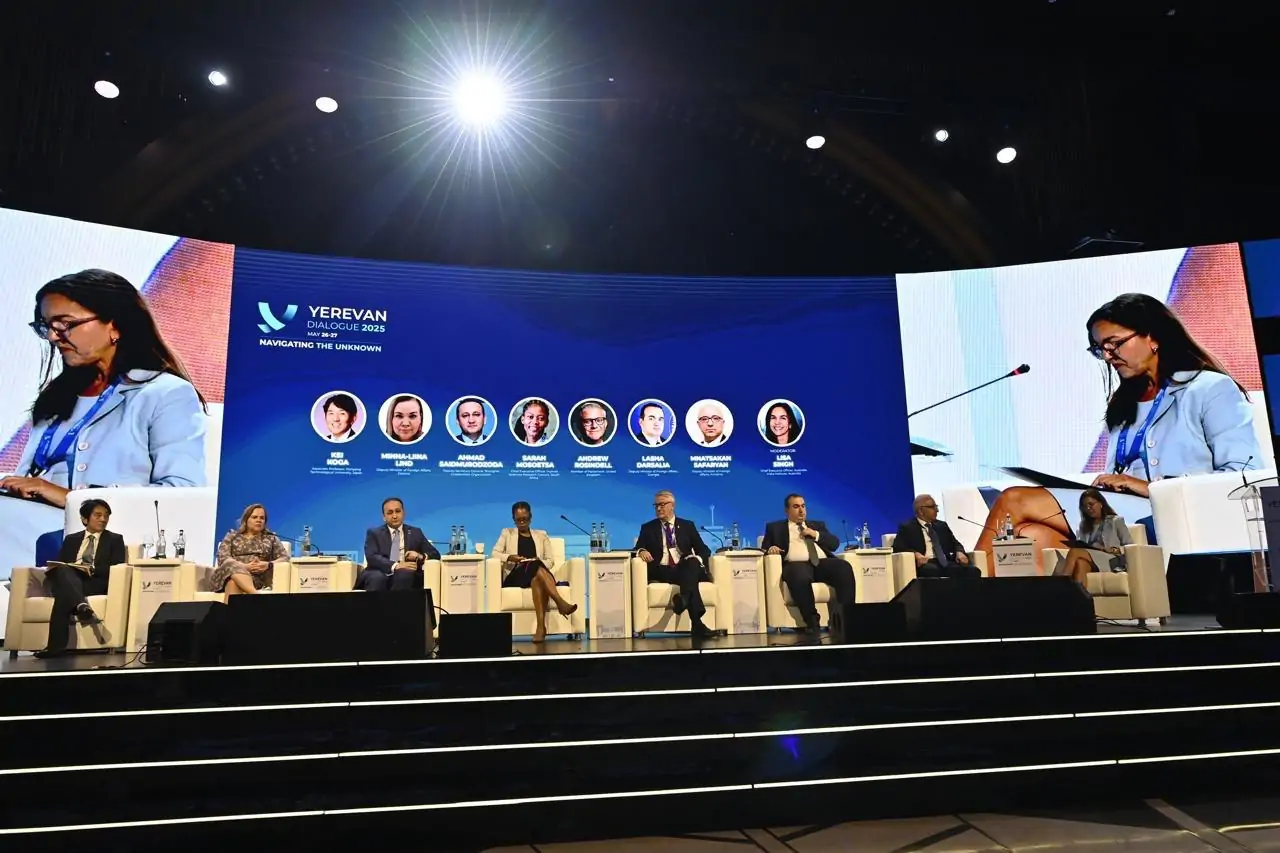
Plurilateral Pathways: Restoring Order in a Fraying Multilateral System

On May 27, the Yerevan Dialogue continues to gather guests from all over the world to discuss relevant issues. A high-level discussion on the future of global cooperation recently gathered high-ranking officials from all over the world, including Mnatsakan Safaryan, Deputy Minister of Foreign Affairs of Armenia; Lasha Darsalia, Deputy Minister of Foreign Affairs of Georgia; Andrew Rosindell, Member of Parliament of the United Kingdom; Minna-Liina Lind, Deputy Minister of Foreign Affairs of Estonia; Ahmad Saidmurodzoda, Deputy Secretary General of the Shanghai Cooperation Organization; Sarah Mosoetsa, Chief Executive Officer of the Human Sciences Research Council of South Africa; and Kei Koga, Associate Professor at Nanyang Technological University of Japan. The panel was moderated by Lisa Singh, Chief Executive Officer of the Australia India Institute.

Mnatsakan Safaryan emphasized: “Smaller states like Armenia are increasingly turning to plurilateralism as a path forward, creating flexible alliances that reflect shared priorities.” Likewise, Lasha Darsalia underlined Georgia’s commitment: “In today’s complex international environment, plurilateral cooperation allows countries like Georgia to engage more effectively in shaping global agendas.” The discussion highlighted that “the value of multilateralism remains undeniable” in maintaining global balance. However, speakers agreed that “rather than turning away from cooperation, countries must respond proactively—especially in moments demanding humanitarian intervention.”

Freedom Online Coalition Panel Discussion on Digital Public Infrastructure for resilience and inclusion: Advancing Human Rights Online

On May 26 within the framework of the Yerevan Dialogue international forum the Freedom Online Coalition convened a high level panel discussion titled Digital Public Infrastructure for Resilience and Inclusion Advancing Human Rights Online bringing together policymakers digital rights experts and civil society leaders to explore how inclusive and rights based digital systems can be developed to ensure equitable participation in the digital ecosystem.

The discussion focused on the transformative potential of Digital Public Infrastructure with speakers emphasizing the need for responsible design that prioritizes privacy freedom of expression and non discrimination Deputy Foreign Minister of Armenia Robert Abisoghomyan reaffirmed this commitment stating as we build resilient digital systems we must ensure that they empower individuals protect privacy and uphold the fundamental rights that are the backbone of democratic societies.

The event concluded with a symbolic ceremony marking the redemption of a stamp dedicated to Yerevan honoring the city’s historical and cultural significance in the digital age and reinforcing the importance of international cooperation and ethical governance in digital infrastructure development.

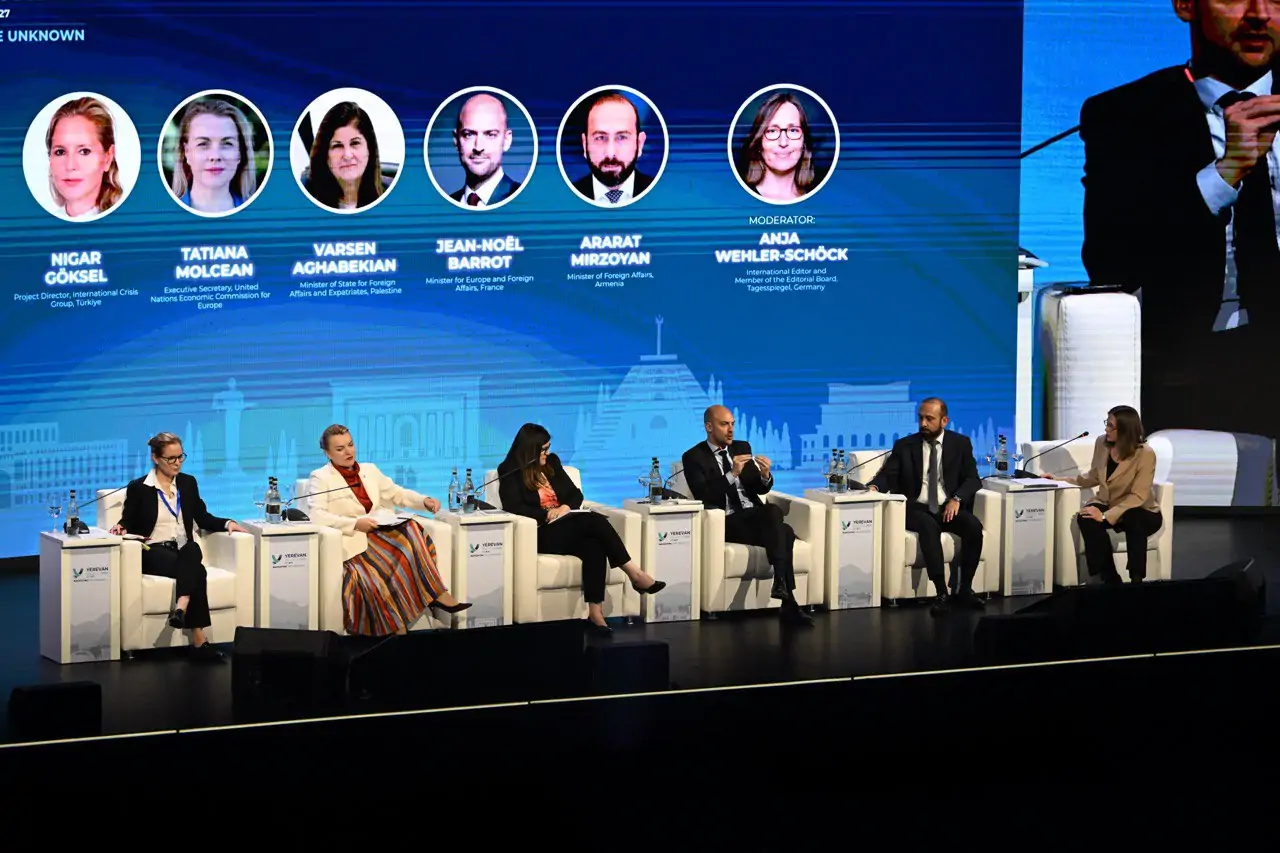
Inclusive Security in the Middle East South Caucasus and Central Asia

On May 26, a high level panel discussion titled “Inclusive Security in the Middle East South Caucasus and Central Asia” took place within the framework of the Yerevan Dialogue 2025 bringing together high-ranking officials and regional experts to examine pathways to sustainable peace through inclusive dialogue and strategic cooperation.

The high participants of the panel discussion were Ararat Mirzoyan, Minister of Foreign Affairs of Armenia, Jean-Noël Barrot Minister for Europe and Foreign Affairs of France, Varsen Aghabekian, Minister of State for Foreign Affairs and Expatriates of Palestine, Tatiana Molcean, Executive Secretary of the UN Economic Commission for Europe, and Nigar Göksel, Project Director at the International Crisis Group Turkey. The discussion focused on current regional and global challenges including Armenia-Azerbaijan peace process.

The Minister of Foreign Affairs of Armenia Ararat Mirzoyan emphasized: “We are ready to sign this agreement and then eventually, of course, ratify, which will open an era of peace and cooperation in South Caucasus. And coming also to the title of this panel discussion, this model probably, hopefully, could also be exported to – of course, every conflict is unique, there are nuances, but the approach, the general aim to establish peace and an open era of cooperation and peace could be exported – to Ukraine, to Middle East, to some other regions which might be needing intervention.”

Jean Noël Barrot noted that lasting peace must be grounded in international law and mutual respect while Varsen Aghabekian called for a just and lasting peace in Gaza stating peace without justice is not peace. Panelists emphasized the importance of upholding sovereignty and the principles of the United Nations Charter, and addressed the strategic significance of regional trade and transport corridors. This event followed by a ceremony for the redemption of a stamp dedicated to Yerevan Dialogue, marking its importance not only for Armenia but also as a symbol of resilience and culture on the international stage.