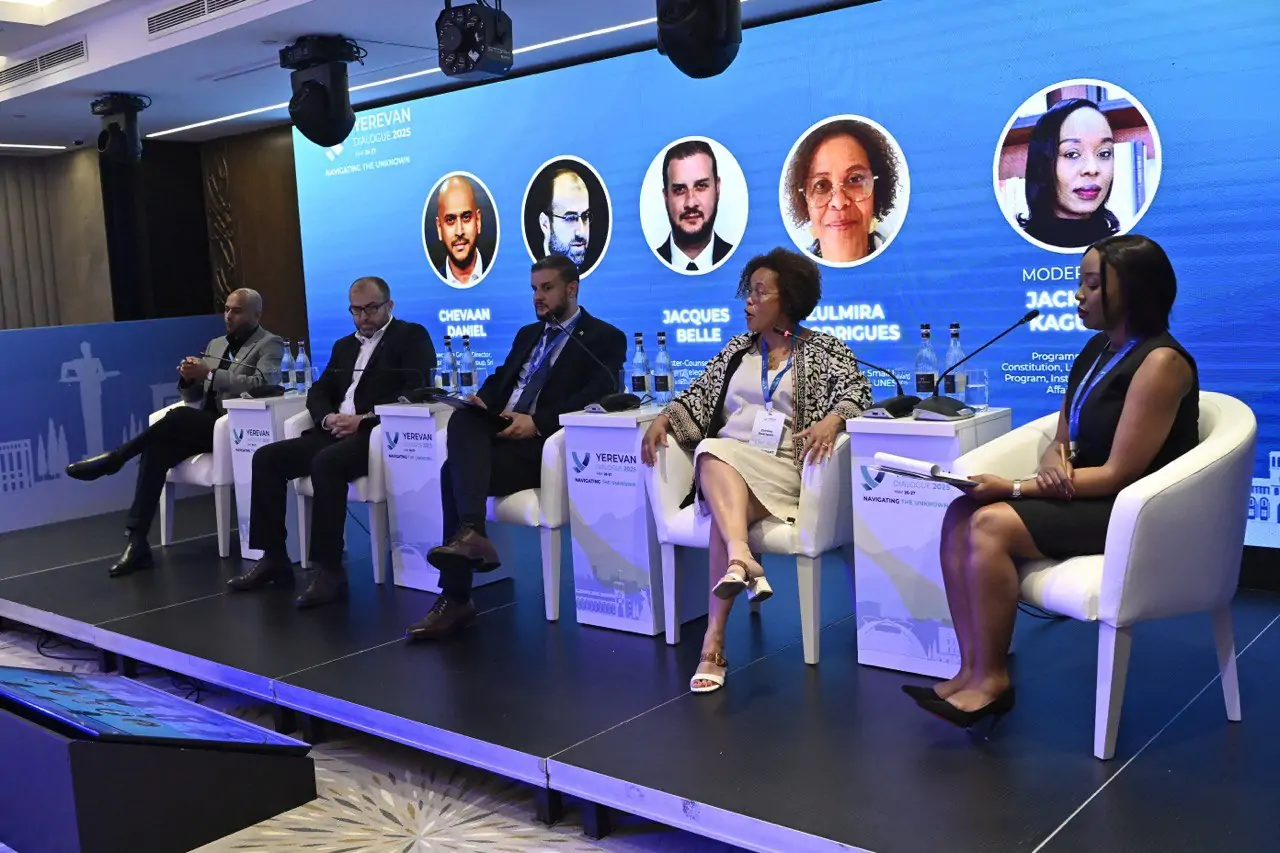
Securing a Resilient Future for Small Island Developing States

On May 26, the Yerevan Dialogue featured a panel discussion titled “Securing a Resilient Future for Small Island Developing States.” The conversation focused on the unique vulnerabilities of SIDS in the face of climate change, economic shocks, and geopolitical pressures. Emphasis was placed on resilience-building, international solidarity, and tailored policy solutions.

The panel included Jacques Belle, Minister-Counsellor and Deputy Permanent Delegate of Seychelles to UNESCO, and Erik Grigoryan, Founder and CEO of Environment Group, Armenia. Speakers shared insights on sustainable development strategies, environmental governance, and the role of global partnerships

The discussion emphasized the importance of equitable climate action, strengthened regional cooperation, and context-specific solutions to help small island nations and other vulnerable communities adapt, thrive, and lead in global sustainability efforts.

Information Integrity: Navigating the Challenges of the Digital Age

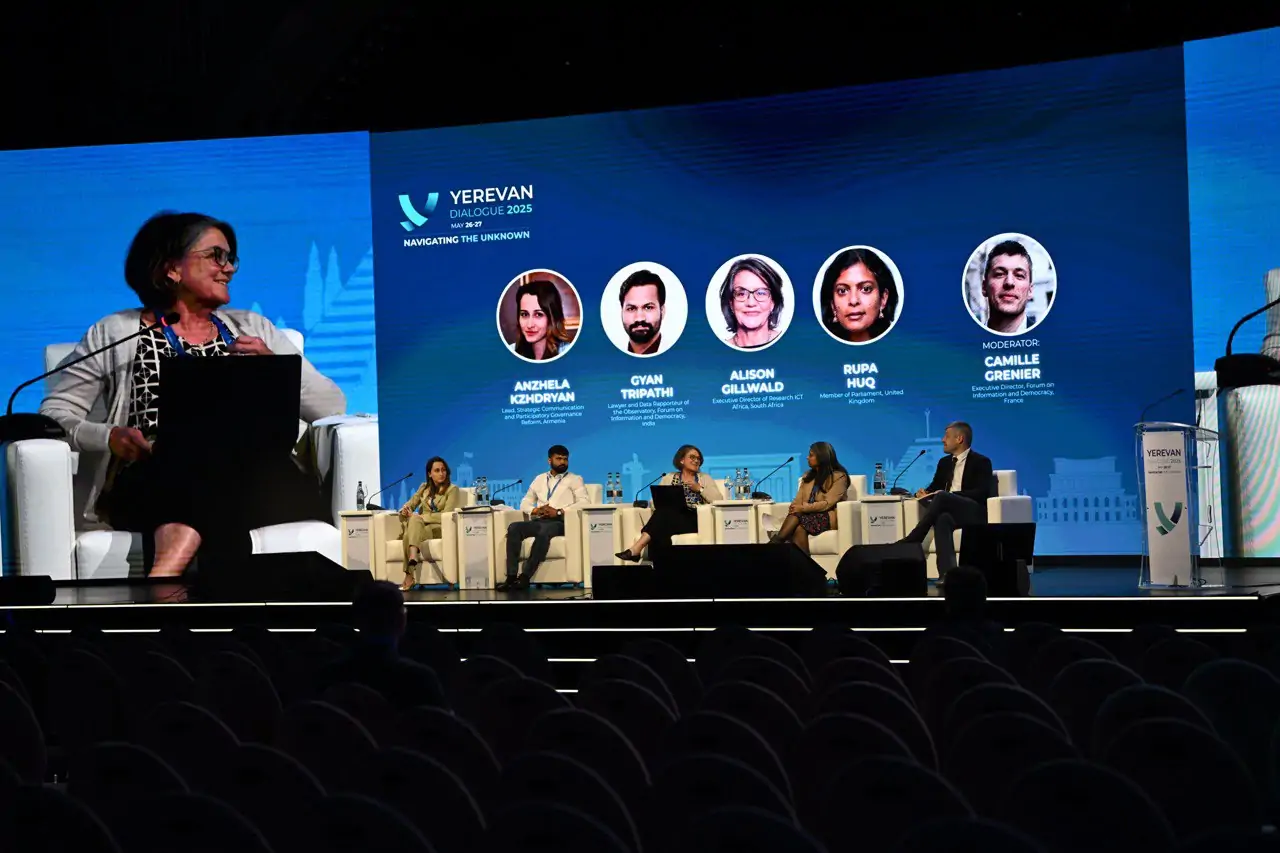
On May 26, the Yerevan Dialogue hosted a panel discussion titled “Information Integrity: Navigating the Challenges of the Digital Age.” The session addressed the growing impact of misinformation, digital manipulation, and declining trust in online content. Participants examined the role of governments, platforms, and civil society in protecting the integrity of information ecosystems.

Rupa Huq, Member of Parliament from the UK, joined the panel to offer a parliamentary perspective on balancing freedom of expression with public responsibility.

The discussion highlighted the urgent need for stronger media literacy, cross-border cooperation, and ethical standards in the digital sphere. Panelists emphasized that securing information integrity is essential for the health of democratic societies and the resilience of public discourse.

The Role of Trade and Transport Connectivity in Promoting Regional Cooperation

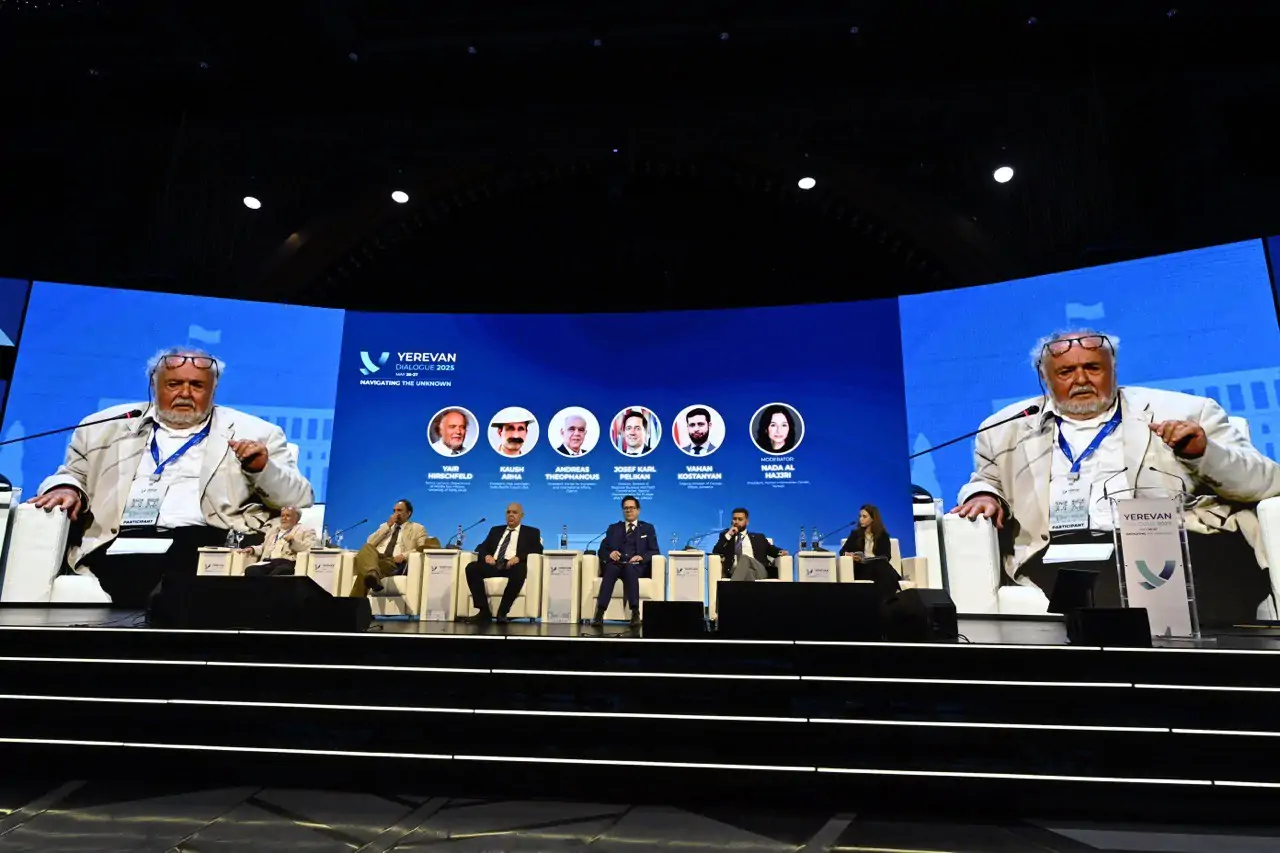
“The Role of Trade and Transport Connectivity in Promoting Regional Cooperation” was held within the framework of the Yerevan Dialogue conference. On May 26, a panel discussion on the topicThe session addressed the issues of how open and efficient transport routes and economic ties contribute to building trust and long-term stability in the region.

Deputy Foreign Minister of Armenia Vahan Kostanyan participated as a speaker, emphasizing the strategic importance of regional openness. Kostanyan underlined Armenia’s vision for inclusive cooperation.

The panel focuses on practical steps toward unlocking trade potential, reducing barriers, and fostering interdependence among neighbors. It reinforces the idea that sustainable development in the South Caucasus depends on shared access, transparency, and regional owners.

Green Technology as a Shield: Strengthening Energy Infrastructure Against Hybrid Threats

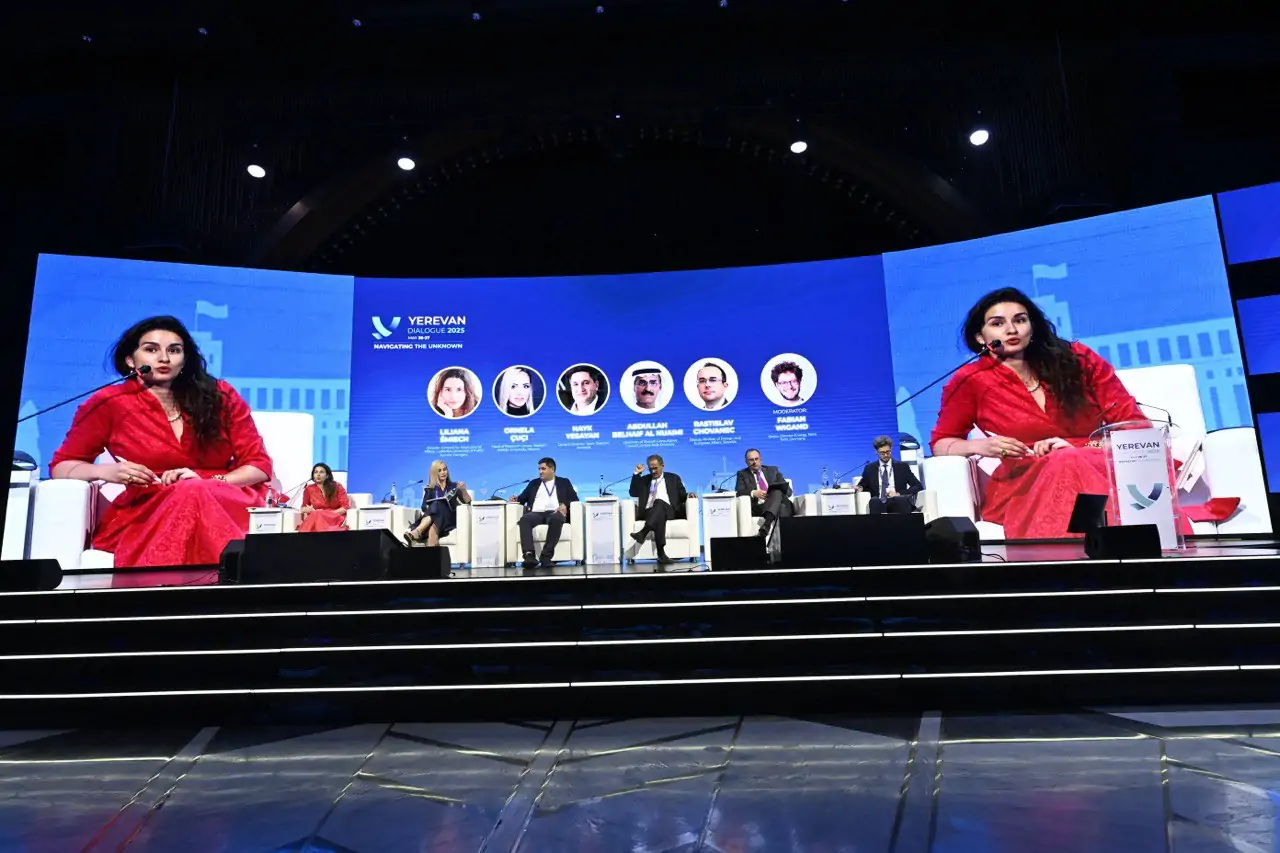
On May 26, within the framework of the Yerevan Dialogue international forum, a panel discussion titled “Green Technology as a Shield Strengthening Energy Infrastructure Against Hybrid Threats” took place, bringing together leading international experts to explore how emerging technologies and shifting geopolitical dynamics are reshaping global energy security. The session was moderated by Fabian Wigand, Senior Director for Energy at Tetra Tech Germany.

The panel featured Rastislav Chovanec, Deputy Minister of Foreign and European Affairs of Slovakia; Abdullah Belhaif Al Nuaimi, Chairman of the Sharjah Consultative Council of the United Arab Emirates; Hayk Yesayan, General Director of Team Telecom Armenia; Ornela Çuçi, Head of the Research Center at Western Balkan University, Albania; and Liliana Śmiech, Director General for International Affairs at Ludovika University of Public Service, Hungary.

Panelists addressed a wide range of challenges, including “cybersecurity threats to solar infrastructure,” “growing dependencies on rare earth minerals,” and “the urgent need for climate education.” They also discussed “the geopolitical consequences of shifting fossil fuel imports.” The discussion emphasized that “achieving a just and secure energy transition requires more than ambitious targets”—it calls for “inclusive financing, regional cooperation, and strategic foresight” to strengthen resilience in an increasingly complex global landscape.

Faith and Freedom: Strengthening Religious Freedom in a Shifting Global Landscape

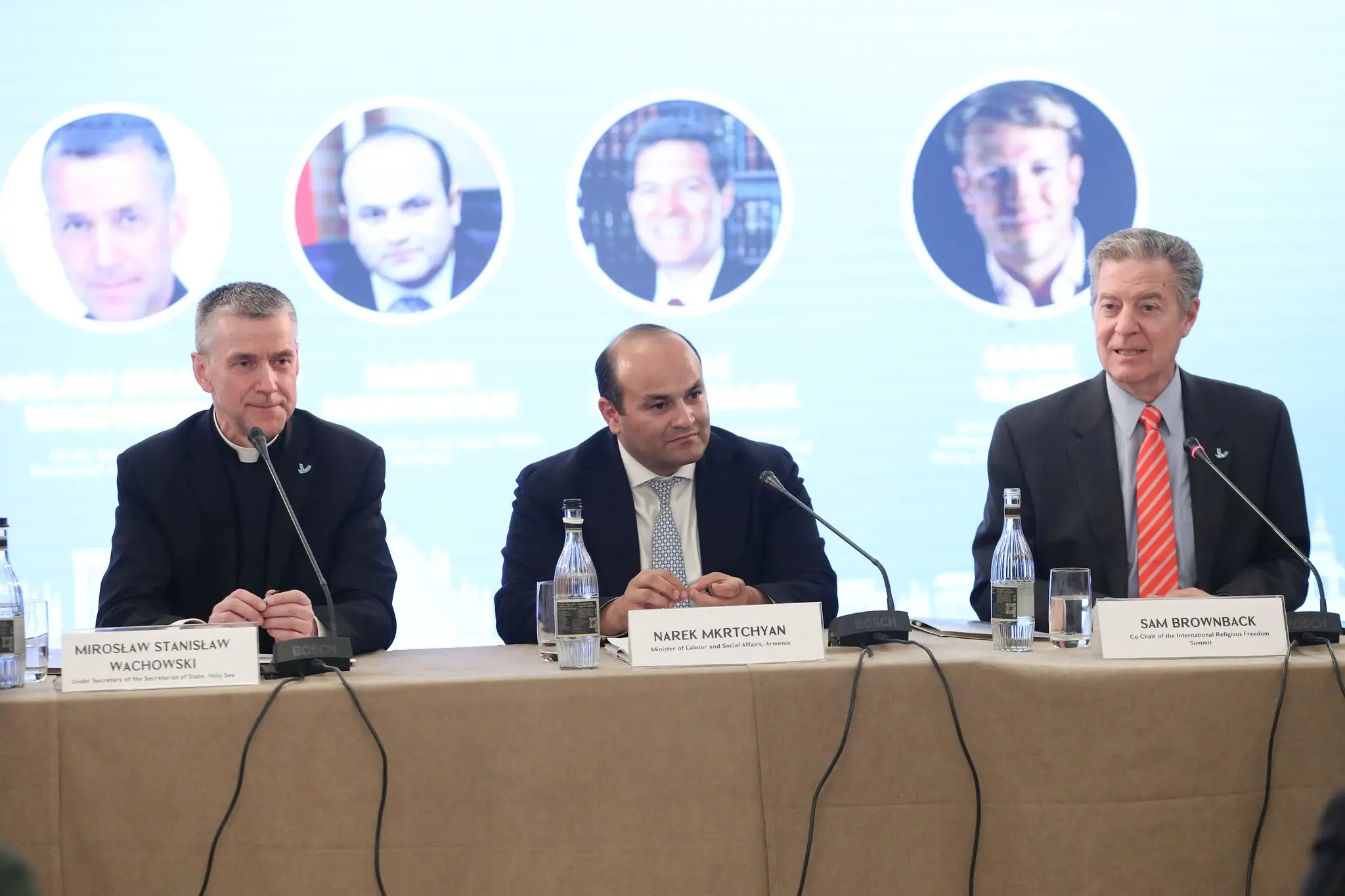
On May 26, the Yerevan Dialogue international conference hosted a high-level roundtable titled “Faith and Freedom: Strengthening Religious Freedom in a Shifting Global Landscape,” bringing together global leaders and advocates to discuss the urgent need to protect and promote religious freedom.

Panelists included Sam Brownback, Co-Chair of the International Religious Freedom Summit and Save Armenia Board Member (USA); Narek Mkrtchyan, Minister of Labour and Social Affairs (Armenia); Mirosław Stanisław Wachowski, Under Secretary of the Secretariat of State (Vatican); Jacob McGee, Deputy Assistant Secretary for the Bureau of Democracy, Human Rights and Labor, U.S. Department of State; and Oscar Tatosian, Co-Chair of the Armenian Assembly of America (USA).

The discussion emphasized that defending religious freedom is not only a moral and legal imperative, but a cornerstone of democratic resilience and global peace. “The erosion of religious freedom threatens to fracture communities, destabilize societies, and undermine the very foundations of international cooperation,” said Sam Brownback. Narek Mkrtchyan added, “In Armenia, we recognize that strong social cohesion and enduring peace depend on the active protection of fundamental rights, including the right to belief.” Participants agreed that preserving religious freedom must remain a priority in both national and international policymaking, particularly in an era of increasing polarization and intolerance.